

Class Reductionism Is a Trap: Why You Can't Fight Capitalism Without Fighting White Supremacy
"There was no such thing as capitalism without slavery: the history of Manchester never happened without the history of Mississippi." Dr. Walter Johnson

What’s ahead:
White supremacy created capitalism, not the reverse
The “white race” was invented to divide workers after Bacon’s Rebellion
Every adaptation of US capitalism has required racial hierarchy to function
Any left movement that treats racism as secondary is strategically doomed
A British ship leaves a West African port bound for North America, its cargo enslaved Africans. In England, ledgers track costs and profits. Across the ocean, those same Africans break their backs on stolen land, building what will become the United States. This is capitalism’s foundation.
Have you heard someone dismiss racism as 'just a distraction from class issues'? Here's why that's not just wrong—it's strategically disastrous.
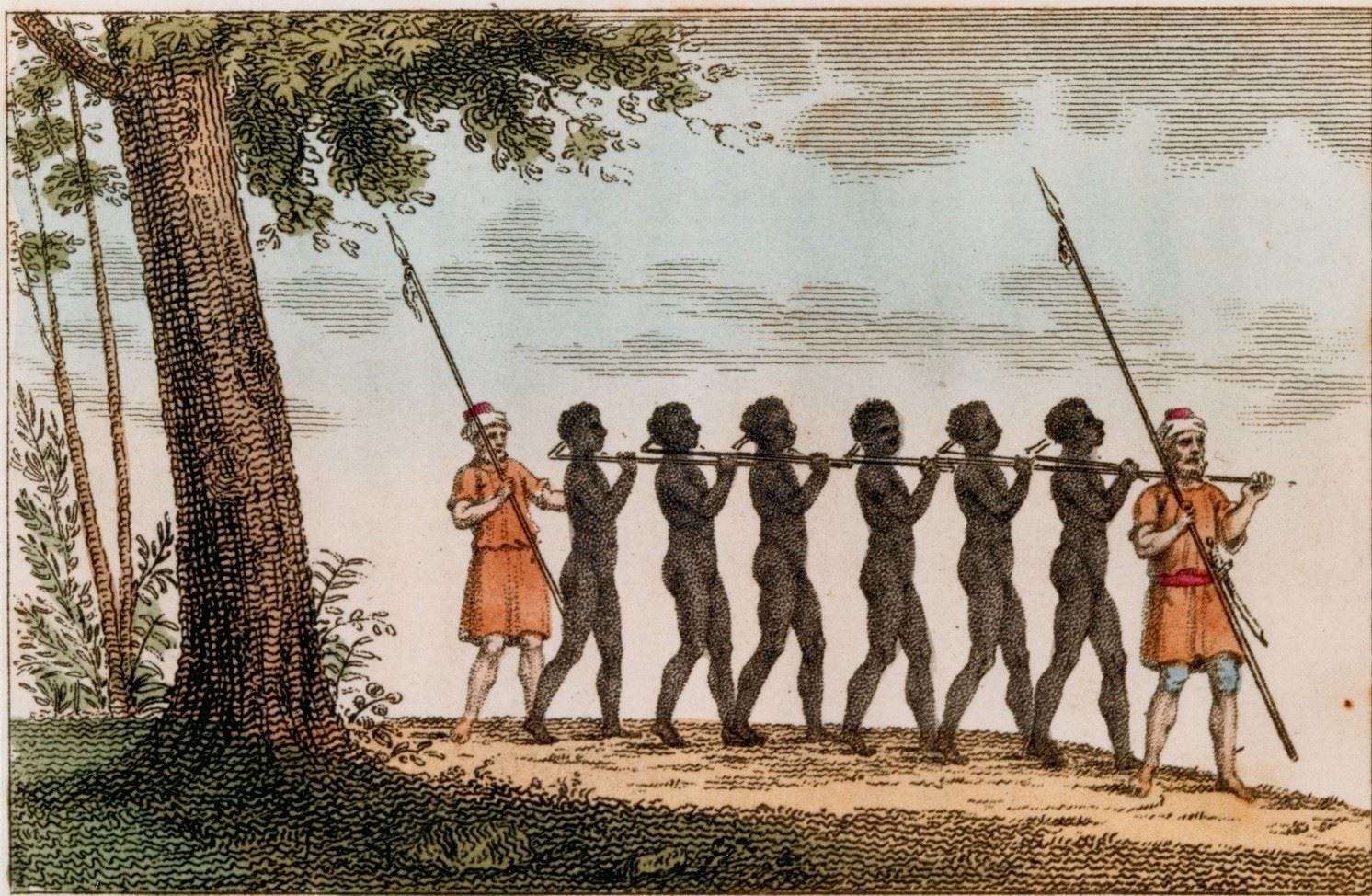
Class reductionists insist everything starts and ends with class. To these theorists, racism, sexism, and xenophobia are ugly byproducts of capitalism—mere symptoms of class warfare. Black History Month offers the perfect moment to correct the record: white supremacy, the belief that only people considered white at any given moment deserve anything while everyone else deserves nothing but exploitation, drove capitalism's rapid global expansion. Indentured servitude and chattel slavery evolved into the wage theft and prison industrial complex we see today.
We built an entire system of law, coercion, property rights, and state violence to make the white owning class as rich as possible. Capital could not have expanded globally without a racial order authorizing conquest and exploiting labor.
Some dismiss this as pedantic. Getting this wrong will devastate any movement calling for revolution. Getting this wrong means maintaining the forces that have driven the destruction of the global south for five centuries.
"Capitalism and racism did not break from the old order but rather evolved from it to produce a modern world system of 'racial capitalism' dependent on slavery, violence, imperialism, and genocide." —Cedric Robinson, Black Marxism
There Was No Capitalism Without Slavery
Modern capitalism did not emerge on neutral ground. It was born of conquest, colonialism, and the transatlantic slave trade. European expansion from the 15th century onward was never color-blind—it grew from existing hierarchies and turned mass theft of land, gold, and labor into industrial wealth's fuel.
Cedric Robinson explained that capitalism "evolved from [the old order] to produce a modern world system of 'racial capitalism' dependent on slavery, violence, imperialism, and genocide". White settlers cast non-Europeans as subhuman to justify enslavement and land grabs. There was no capitalism without slavery—Manchester's mills and New York's banks were financed by cotton and sugar plantations in Mississippi and the Caribbean.
By the 18th century this pattern had become global. European philosophers spoke of liberty at home even as their empires imposed brutal racial orders abroad. Christian pastors would preach about loving thy neighbor while Thomas Bacon preached to enslaved Africans in Maryland, “[…] And that you are to serve your owners with chearfulness, respect, and humility, not grumbling, or giving any saucy answers, but doing your work with readiness, mildness, and good nature; because your sauciness and grumbling is not so much against your owners, as it is against GOD himself, who hath placed you in that service [...].”
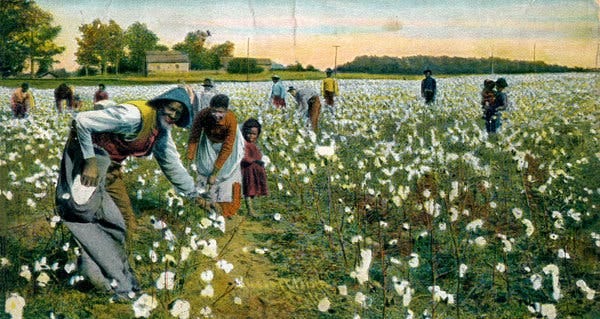
The result was not a grudging accommodation of racism – it was the ideology that legitimized empire. Racism was turned into a profit strategy, a way to exploit the global south and split workers along arbitrary lines. As historian Walter Johnson puts it, under racial capitalism “racism became a technique for exploiting [Black people] and for fomenting the hostility of working-class whites toward [them], so as to enable white capitalists to extract value from everyone else”.
What this changes about organizing
If white supremacy is part of capitalism’s architecture, then anti-racism is not an optional moral add-on. It is the operating requirement for building power that lasts.
A non-reductionist strategy looks like this:
Universal demands designed to break racialized exclusion, not reproduce it. If a program can be administered through racist discretion, it will be.
A clear enemy story that names the institutions that profit from division: bosses, landlords, police, border regimes, courts, and the political class that manages them.
Discipline against scapegoating. No “crime” panic. No immigrant blame. No dog-whistle “deserving” worker talk. Those are wedges, not analysis.
Leadership and base-building rooted where exploitation is sharpened by race, including workplaces and neighborhoods that the ruling class has already written off.
Solidarity that is material, not symbolic: shared risk, shared protection, shared demands, and repair for harms that were not accidental.
This isn’t a purity test. The ruling class doesn’t need you to hate anyone. It needs you to accept the bribe of racial privilege, take comfort in not being at the bottom, and never look up at who’s actually extracting value from your labor.
↻ If this reframes something you've been thinking about or think this could help someone else, hit the restack button—it helps this reach people who need it.
The American Template
The United States exemplifies this dynamic from its founding. The U.S. was a settler-colonial project built on white supremacy, African slave labor, and Native genocide. Early colonists seized Native lands by fraud and fire, then legally redefined them as English property (not unlike the U.S. calling Venezuelan oil "ours"). Slavery began in 1619 in Virginia and soon became the engine of Southern wealth. By 1776, tobacco, rice, indigo, and sugar plantations—all worked by enslaved Africans—had made the colonies obscenely wealthy. These were capitalist enterprises funding banks and factories in the North and abroad. The young republic's wealth was soaked in blood, and the nation's class structure was shaped by this racial hierarchy from the start.
Inventing the White Race
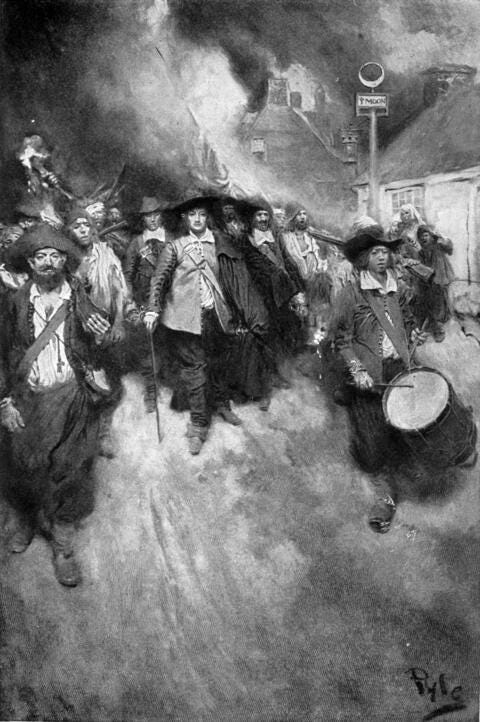
Early elites codified race to divide workers. After Bacon’s Rebellion of 1676—when Black slaves and poor white indentured servants rose up together against the Virginia aristocracy—planters struck back by inventing the “white race”. They passed laws granting poor Europeans modest rights (land ownership, voting, legal standing) while imposing permanent chattel slavery on Africans.
Theodore Allen documents this as deliberate strategy: the ruling class “instituted a system of racial privileges” to define and maintain the “white race” and implement a system of racial oppression. This gave poor whites a psychological wage—a status bribe—in exchange for betraying solidarity with Black workers. The result was a permanent split inside the laboring class.
Even the poorest whites defended the hierarchy that kept them exploited, because at least they were “not Black.” The fact that roughly 90% of Confederate soldiers never personally owned slaves, yet went to die for the institution anyway, makes this evident.
The ruling class doesn’t need you to hate anyone. It needs you to accept the bribe of racial privilege, take comfort in not being at the bottom, and never look up at who’s actually extracting value from your labor.
Reconfiguration, Not Emancipation
Emancipation was forced by war and resistance, then contained by a rapid rebuilding of racial control to protect property and profits for the owning class whites. This was not the end of racial capitalism—it simply reconfigured. During Reconstruction, Southern elites and Northern capitalists faced a choice: true multiracial democracy or restored white supremacy to defend property. They chose the latter.
Jim Crow laws, debt peonage, and Black Codes turned former slaves into a coerced workforce. Segregated schools, disenfranchisement, and terror reinforced this order. Black people were corralled into poverty and political irrelevance while even the poorest whites retained a veneer of privilege. The plantation economy of the South may have formally ended, but the mechanics of racial exploitation shifted into sharecropping, convict leasing, and public violence.
In the 20th century these mechanisms adapted but did not disappear. New Deal and postwar programs created suburbs and home ownership for whites through racially discriminatory lending, insurance, and zoning. Jim Crow neighborhoods and race-based lending policies legally locked Black and Brown people out of these wealth-building tools.
Labor laws and Social Security initially excluded the most common Black jobs, suppressing Black wages. Policing, surveillance, and imprisonment expanded into a vast system of social control targeting communities of color and filling prisons with the Black and Brown bodies needed for the slavery still allowed through the 13th Amendment.
In each case, white supremacy determined who got security and who was forced into precarity, who would be saved and who was expendable—all to stabilize capitalist profits on a racially stratified base.
Class Reductionism Will Fail
In 1967, Dr. Martin Luther King Jr. reminded us that the "evils of racism, economic exploitation and militarism" are bound together. You cannot dismantle one without confronting the others. Class-reductionists who treat racism as an optional accessory fall into a trap that has doomed movements before. The racial hierarchy in America is not incidental—it's baked into capitalism's architecture. It decides who owns land, who votes or sits on juries, and whose labor is valued. Fighting for economic justice without undoing these racial cages leaves the machine's core intact.
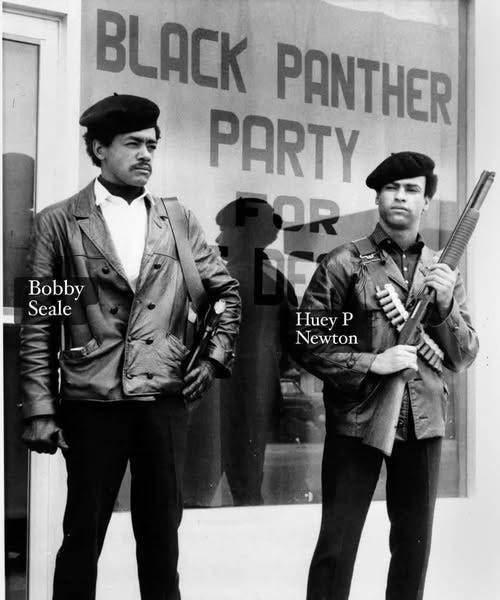
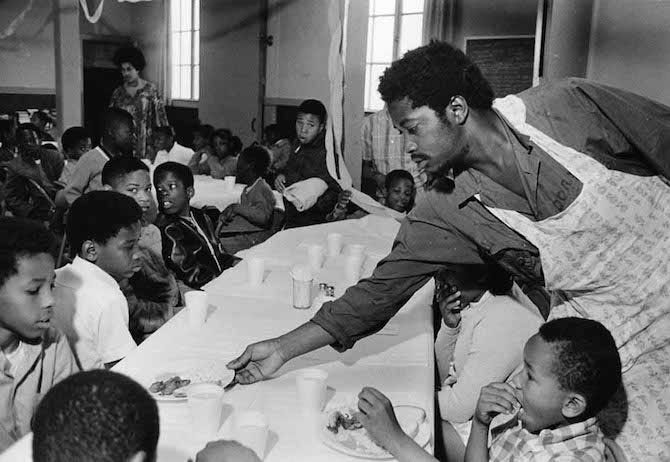
A left that refuses to name the racism at the heart of capitalism will never free the working class. We have to fight both evils at once. As Black Panther leader Huey P. Newton insisted, "We have two evils to fight, capitalism and racism. We must destroy both". This is not moral posturing—it's strategy. Treating white supremacy as a detachable problem is how the ruling class survives. Ending capitalism will never be possible without ending white supremacy, because the two were formed in the womb together. Liberation demands abolishing whiteness as a social and political regime and building solidarity across racial lines, grounded in truth, repair, and a shared commitment to collective freedom.
What solidarity looks like in practice:
Share this with someone who needs to hear it
Drop a comment: what’s one way you’ve seen racial division used to break working-class power?
Subscribe for more analysis from a guy who knows what the other side is thinking all too well.
HASTA LA VICTORIA SIEMPRE.